View the published fields and source references.
Yemen Reads / Evidence
Results, with context.
Delivered work, recorded results, and assessment methods.
Earlier public record / Captured 29 September 2026
The previous site, documented.
The earlier Yemen Reads homepage listed 30,000 beneficiaries, 60,000 books, 75 training courses, and 55 reading cabins. Its public content file named Book's Drop Boxes, Reading Meetings, and Writing Training.
The full captures remain in the organization’s records. The extract records their SHA-256 checksums for verification.
These are figures and labels reported by the organization's previous public website, not independently verified results. The source does not state the reporting period, counting method, or whether the beneficiary total represents unique people. The totals are not combined with newer program results.
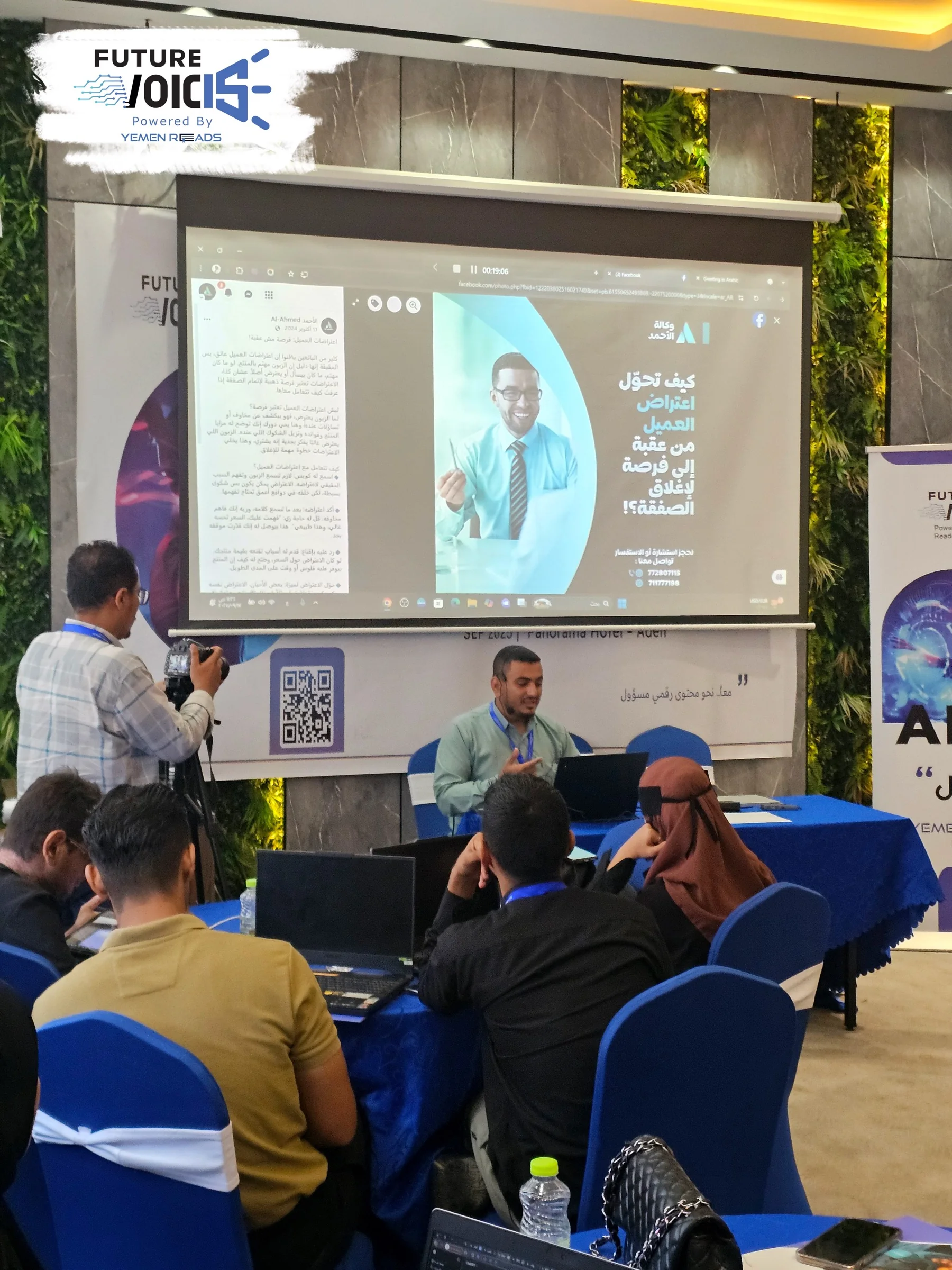
Future Voices / Delivered cohort / 2025
A reported learning gain.
The program's internal feedback and evaluation report states that overall knowledge increased from 52% before training to 88% after training. The result describes a short-term assessment of one cohort.
52% 88%Reported overall knowledge / before and after
Aden cohort, 15 August to 15 October 2025. Evaluation report dated 30 October 2025.
Annex 12, Future Voices Feedback & Evaluation Report, states a participant group of 32 and names Google Forms and suggestion boxes among its tools.
The report describes pre-training evaluations, post-training reflections, and a final evaluation. It also refers to surveys, focus groups, and interviews.
An internal cohort evaluation. Paired response counts, question weighting, and the aggregation formula are outside the published report. The result covers the training period.
Reading the result → The figures are attributed to the internal evaluation. They describe reported knowledge scores during the cohort. Contact the partnership team to discuss the underlying source.
Future Voices / Documented outputs
Request the media report by email ↗
Documented media coverage.
A separate media record documents 12 placements: 10 press articles and 2 television segments. It does not provide audience reach, impressions, or unique viewers.
Source → Future Voices 1 Aden Media Coverage and Photo Gallery Report, pages 2 and 14. Media placements are outputs, not evidence that attitudes or behavior changed.
NEXTGEN / Delivery record
Training and mentorship, documented.
The three-quarter narrative reports preparation, training, and evaluation phases completed during 1 October 2025 to 30 June 2026. It records five AI tools integrated into the curriculum. A separate mentorship report records 2.5 months of support.
Preparation, youth training, and evaluation activities are reported complete in the three-quarter narrative submitted 15 July 2026.
The report documents training activity in Mukalla. The record covers the 2025–2026 pilot cohort.
The NEXTGEN Selection Report records 15 of 20 trainees securing remote or freelance work. This is a program-reported employment result; it does not measure sustained earnings.
Sources → NEXTGEN Selection Report, NEXTGEN Three Quarters Narrative Report, and NEXTGEN Mentorship Report. These reports contain private material; ask for an appropriate review copy.
How to read the record
Four different kinds of evidence.
Participation
Who took part, with a defined denominator.
Delivery
What was taught, practiced, or produced.
Learning
What an assessment measured, with its method and limits.
Longer-term change
What can only be claimed after appropriate follow-up.
Review the underlying record.
Ask which program documents can be shared privately, and request a proposal for the next cohort.
Request a diligence discussion